
1941 & 1942 & Dad's Diaries.
Why choose these years? Normally, I have no way of checking memories, but my dad kept two diaries from these years and they both survived. I had to make some guesses, but it is fascinating to see where a fact may have been a memory of mine too. Did my memory of Uncle Bill & a haircut coincide with dad’s entry in January 1941?
Prior to the diaries being written, the British had been defeated at Dunkirk in 1940 (Uncle Bill survived that), Churchill had taken over from Chamberlain, and it was the year of the Battle of Britain.
 During
the year the 1941 diary was written, Hitler launched “Operation Barbarossa” to
invade the Soviet Union, the Germans were winning the war in North Africa, the
convoys were being sunk, at an alarming rate, by U-boats operating in "wolf
packs" in the Atlantic, almost at will. Of
course, on December the 7th. The Japanese struck at Pearl Harbour.
During
the year the 1941 diary was written, Hitler launched “Operation Barbarossa” to
invade the Soviet Union, the Germans were winning the war in North Africa, the
convoys were being sunk, at an alarming rate, by U-boats operating in "wolf
packs" in the Atlantic, almost at will. Of
course, on December the 7th. The Japanese struck at Pearl Harbour.
In 1942
the Germans were still fighting the Russians and began to loose after Stalingrad
& then the Russian winter beat them. Montgomery took over in North Africa
meanwhile the Jews had been rounded up into a ghetto in Warsaw & were starving
to death.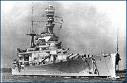
Although my earliest recollection was being taken to the air raid shelter in our back yard, there are very few references to the war in the diary. He notes a couple of bombing raids on Manchester (the 11th of March for three hours and on 1st. June, when we were visiting Whalley), the loss of the ships “Prince of Wales” & “Repulse” and being issued with a tin hat! Pearl Harbour & America's entry into WW2 doesn't get a mention.
What Dad did note was a very consistent job of working overtime. One & a half hours, most days. He put down his take home pay at the end of each week, (between £4 & £5. That would give you a yearly income of £250 approximately). I wonder if this was to check he was being paid the correct amount or just a comfort blanket that he was now on steady money? The other thing he noted seemed to be his constant pleasure of frequent visits to the cinema, often noting the film he saw. In those days, the three main entertainment sources were the radio, the cinema & the variety theatre.
 Telephones
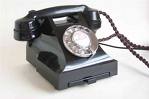
in the home were rare in dad's world. His
entire collection of phone numbers was two! An H. Lund & the “Motts”, our next
door neighbours. He obviously didn't have any relation actually on a private
phone. I certainly knew of no one else who had a telephone! Urgent
messages were delivered by telegram or you relied on the post. A letter cost 21/2d
(1p) to post. There was only
one price, no 1st or 2nd class post & there were two deliveries a day.
Telephones
in the home were rare in dad's world. His
entire collection of phone numbers was two! An H. Lund & the “Motts”, our next
door neighbours. He obviously didn't have any relation actually on a private
phone. I certainly knew of no one else who had a telephone! Urgent
messages were delivered by telegram or you relied on the post. A letter cost 21/2d
(1p) to post. There was only
one price, no 1st or 2nd class post & there were two deliveries a day.
There
seemed to be a lot of family visits & people to stay for the weekend. I have no
recollection of this being exceptional, so maybe that was regarded as normal. The house was big and we had spare
rooms. Maybe it was that travelling took so long by bus or train? (In his
diary it says, “Went home on 4:10 bus & arrived home 8:00” Four hours to do a
journey, from Harrogate to Manchester, that would take about an hour and a half by car
today). His brother Ernest seemed to stay a fair number of times & most people
are referred to by their first name, except grandparents. They are known as Mr.
& Mrs. Hebden! That’s surprises me. The Hebden's were never a formal family!
There is a record of Aunty Ann working nights. I do know she lived with us & worked at A. V. Roes (on Trafford Park?) She once had an airman who courted her in the house. (They were in the middle room and I made a nuisance of myself, I remember!)
The surprise was that from January ’41, dad worked in Manchester somewhere. I had always remembered him being in Harrogate. He appears to have been posted to Harrogate in the August of ’41. In the Oct, he notes he applied to transfer back to Manchester. This would suggest that his initial posting, as a civil servant, was Manchester.
During 1942, his overtime remained high and wages fairly constant, averaging the £4-£5 mark. There is a reference to “drew 13/6d fire watching money”, (that’s approximately 68p). I had no idea that firewatchers got paid! It seemed a lot of money to me. Whilst trying to get information on it, I read this on oldgaffer.com. "The pay was phenomenal, ten shillings a night, and when one understands that the average weekly labourer’s wage was between three and five pounds a week, a week’s fire-watching was tantamount to a week’s wages and one spent most of the time sleeping. I jumped at it."
 In
1942, the diary records that he is 5’ 8” tall &
weighing 10st. 6lb. His address was 42 Dragon Ave. Harrogate. The early entries
are all about fire watching, trips to the cinema and visiting relations. The
whole of the year’s diary was marked by the fact that he didn’t mention the war
once. He does note the death of Bill Hebden, his brother in law. Although it
mentions mum
went to Whalley but there is no reference to the funeral. There is a fortnight
after the death that mum is in Whalley. I obviously went with her but I have no
recollection of sadness, death or a funeral. I think those were the days of
protecting children from all of real life. Uncle Billy was a favourite uncle and I was under 4 years of
age.
In
1942, the diary records that he is 5’ 8” tall &
weighing 10st. 6lb. His address was 42 Dragon Ave. Harrogate. The early entries
are all about fire watching, trips to the cinema and visiting relations. The
whole of the year’s diary was marked by the fact that he didn’t mention the war
once. He does note the death of Bill Hebden, his brother in law. Although it
mentions mum
went to Whalley but there is no reference to the funeral. There is a fortnight
after the death that mum is in Whalley. I obviously went with her but I have no
recollection of sadness, death or a funeral. I think those were the days of
protecting children from all of real life. Uncle Billy was a favourite uncle and I was under 4 years of
age.
I can remember visiting dad in Harrogate. Two things stick in my mind. On one occasion, I broke his glasses playing around. (Not mentioned in the diary. As he mentions most things that broke, I can’t believe it was ’41 or ‘42), the other thing, was a telegram, received by mum, telling her that her brother Ken had been injured. As Ken was only 18 at the tale end of the war, this couldn’t have been that early. Yet the memory is, that the news was received in Harrogate. Was Dad there in 1945? Is my memory wrong? I definitely have no memory of telegrams & Uncle Bill's death.
The only other diary I have is 1938, very sparsely filled in. He wrote his address is 104 Mile Road, Bedford! Surprising error for a man who as usually very accurate or 102 wasn't our only address. His wages seem to be split into two halves, added together he was on about £4 roughly as a labourer in the brick yard.
There is little recorded after about June, just his wages. Before then, its shows visit's to the cinema, a couple of times off work through illness (no reason stated). Visits to & from a friend called Norman, planting of stuff in his garden. The only record of mum’s pregnancy is, “bought cot” plus her visiting the clinic and her weight recorded only once. On my birth date, it just says “Baby born” (no weight, no name, no time). Other than that, it’s just, wages at the end of the week. Plus a single note “Broke 3rd finger right hand” … in very shaky handwriting!
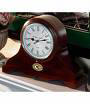 Not
connected to the actual diaries, I
do know that in all of the war years, one thing was sure. Everyone had their
clocks set either fast or slow. Kath’s dad, Percy, used to say country people
asked, “Is your clock by the day?” which really meant, how accurate is your
clock?
Not
connected to the actual diaries, I
do know that in all of the war years, one thing was sure. Everyone had their
clocks set either fast or slow. Kath’s dad, Percy, used to say country people
asked, “Is your clock by the day?” which really meant, how accurate is your
clock?
Was it an era of poor timepieces, that to get to work on time, you put the clock ten minutes fast? The problem with this logic was, you knew it was fast & therefore compensated by ten minutes! Big Ben always sounded on the radio before the news, so you knew how accurate your home clock was anyway. Or was it some deep physiological fear? Who knows?
All other time pieces were kept accurate. The town hall or church clock, the BBC, the local factory hooter. Why were personal clocks always deliberately set fast or slow?
Amongst my friends & family, I never knew anybody that had the right time on their mantelpiece clock.